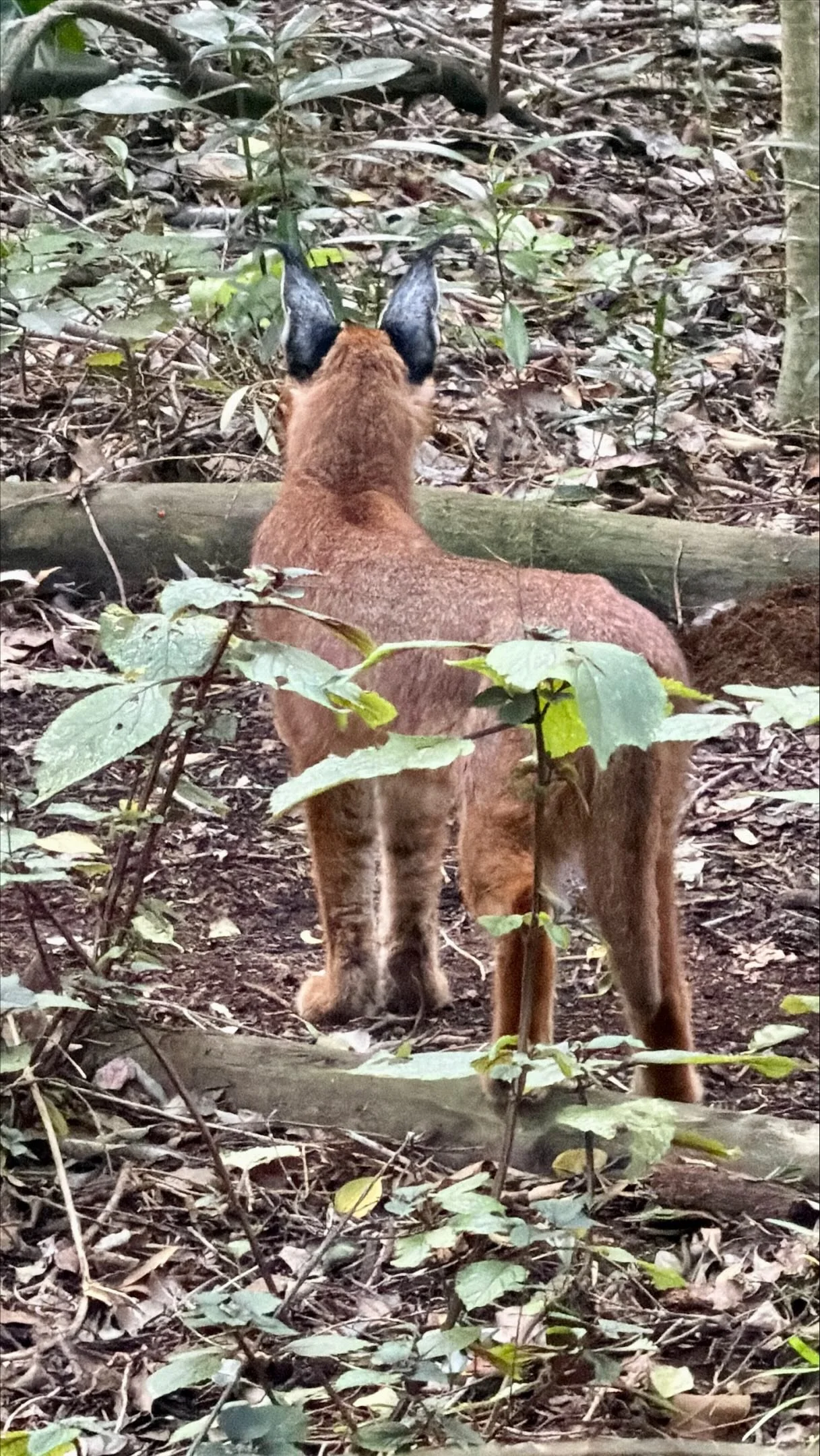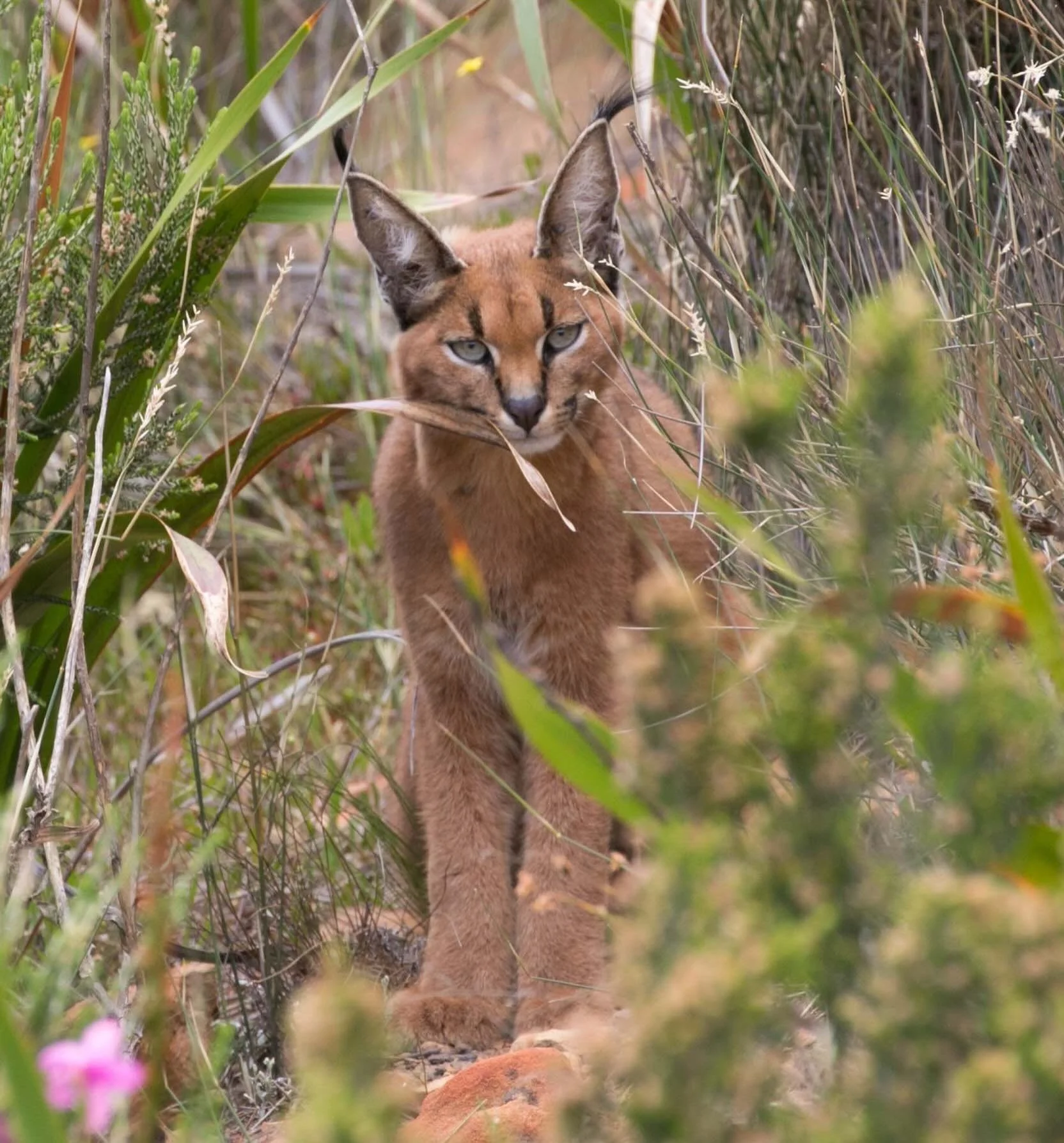
Hermes walks a “tightrope” near Kloof Nek in August 2020. He was our most-sighted caracal, recognizable by his pale colored ear tags.
Protecting biodiversity through research and conservation.
The Urban Caracal Project is a project of the Institute for Communities and Wildlife in Africa (iCWild) at the University of Cape Town. Key collaborators also include South African National Parks, Universities of California (Santa Cruz and Los Angeles), the City of Cape Town, and private landowners in Cape Town.
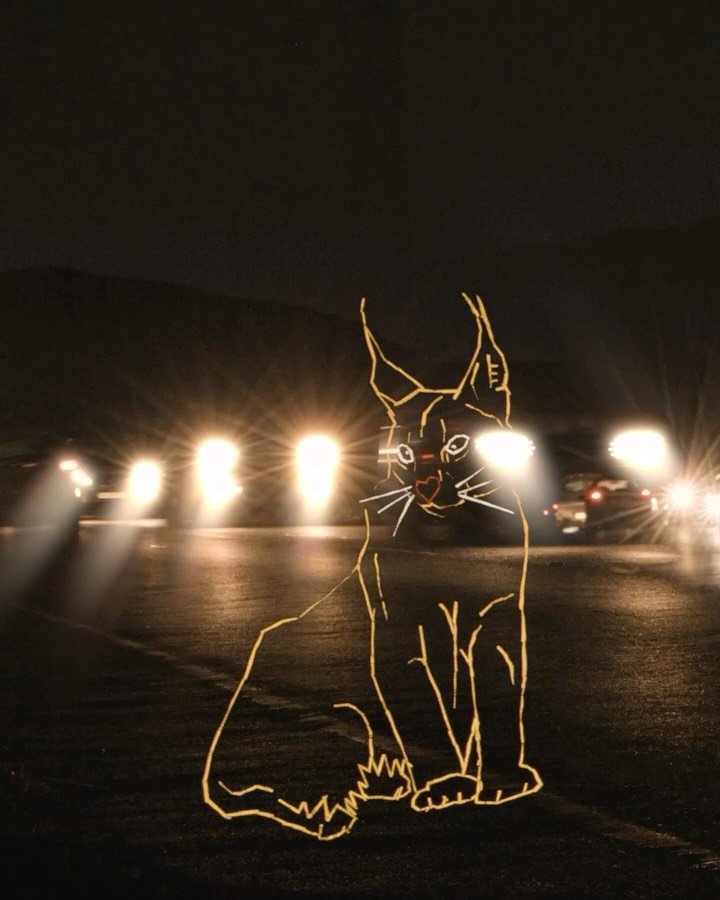
Amazing illustration by Amy Novella.
Follow us on social media!
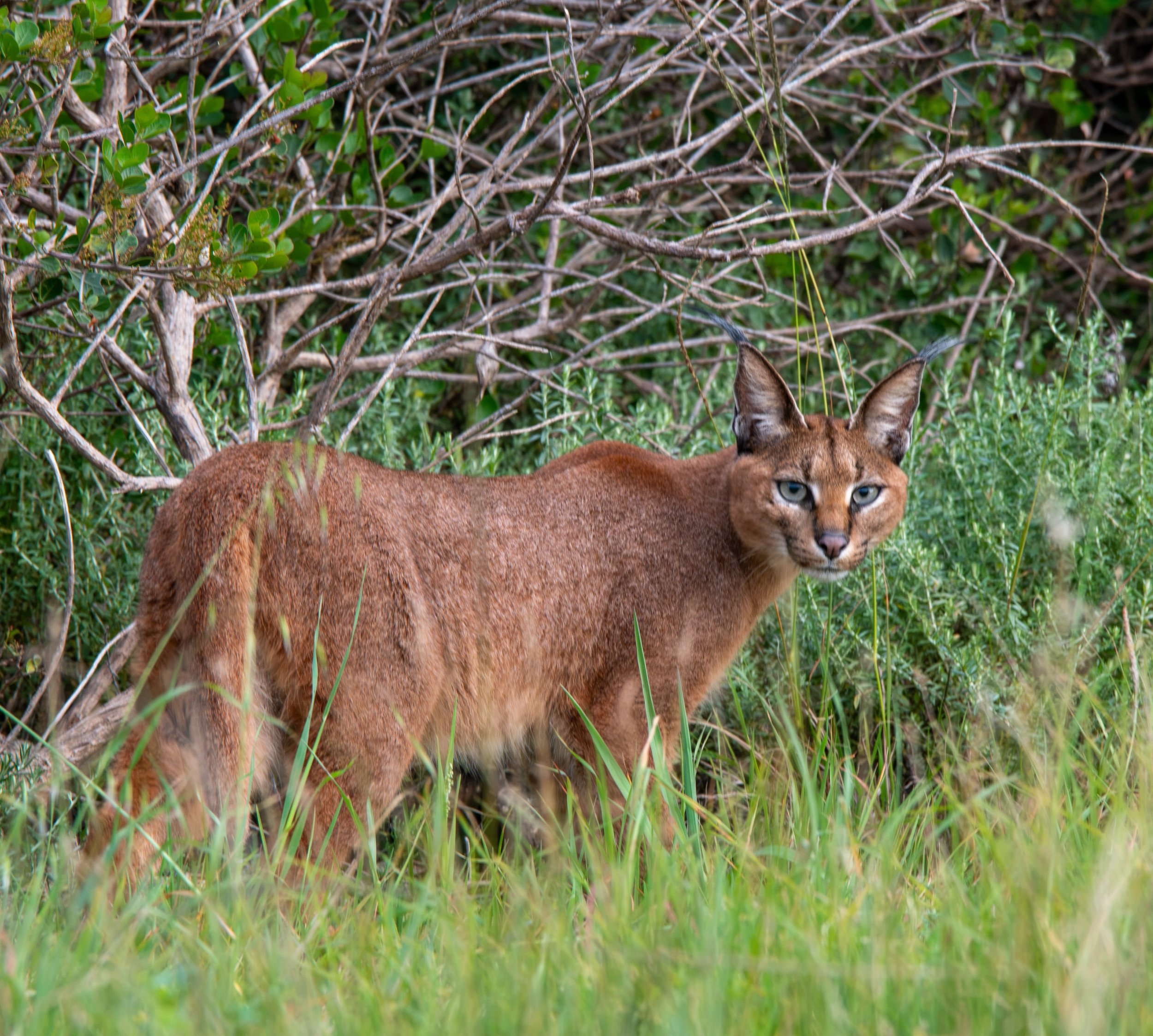
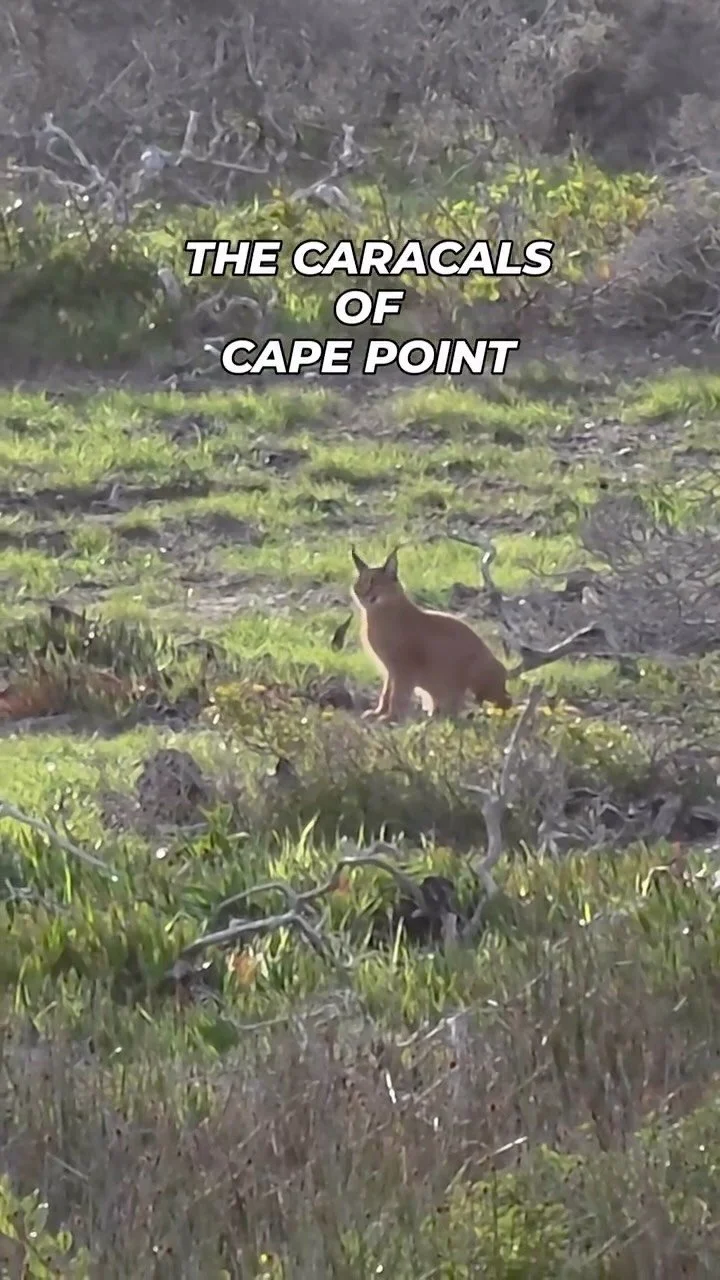
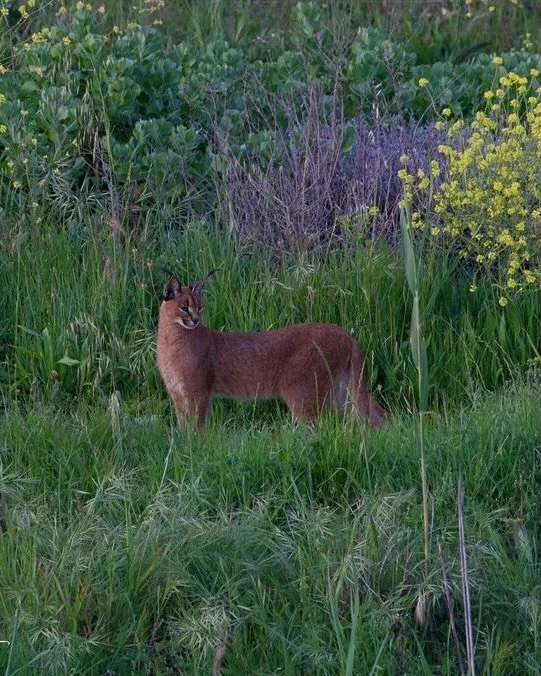
This gorgeous caracal was spotted on the way to #CapePoint a few weeks ago. 📷 Thanks to Nanette Smith for sharing!
If you see a caracal, please let us know! Our online sightings form is in the link in our bio 📲📄
#ConserveCapeCaracals #urbanwildlife #capetown #wildlifephotography
🚨 NEW PAPER ALERT: TOXIC TOWNS 🚨
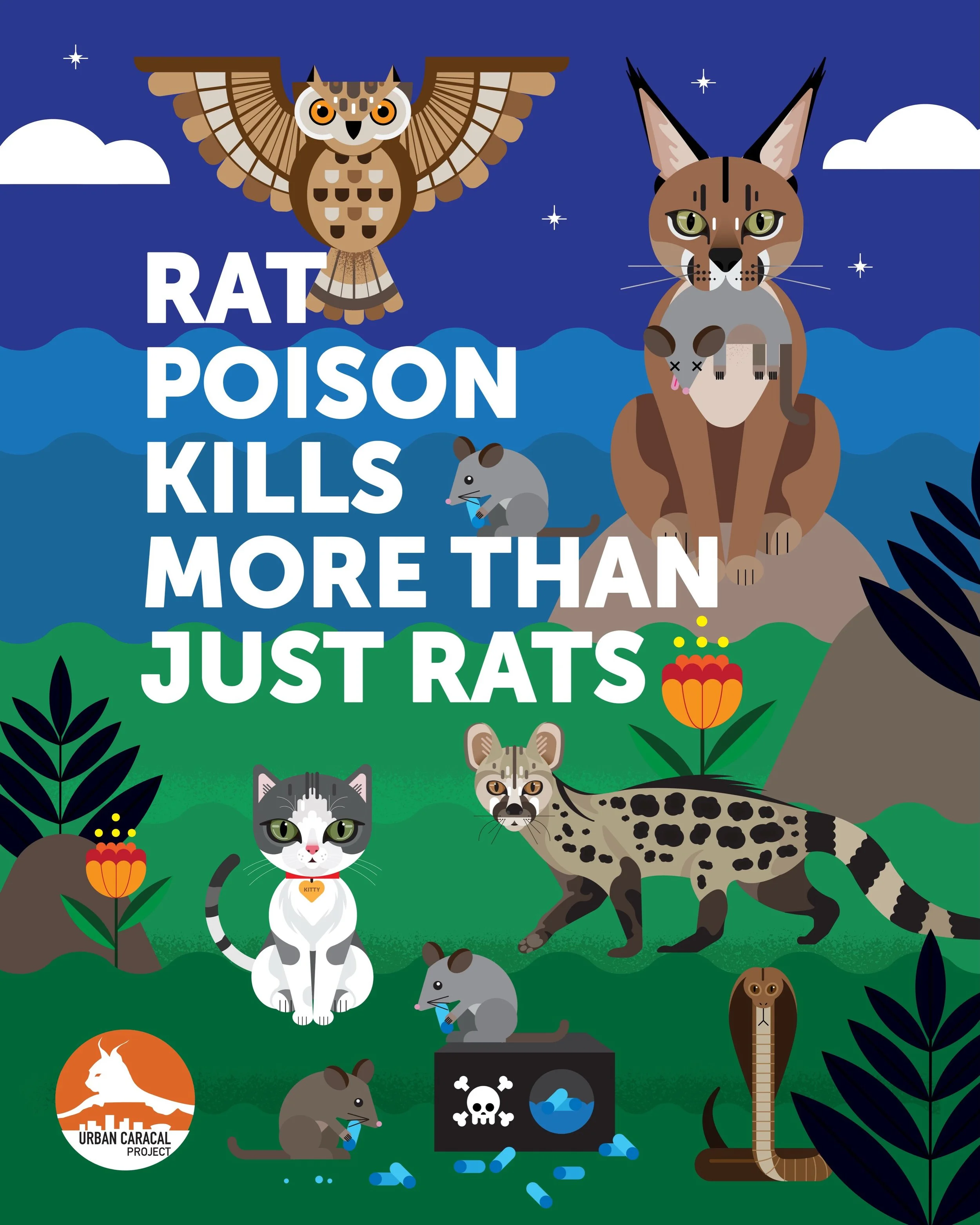
Caracals are red warning lights for wildlife exposure to rat poisons in and around Cape Town!
Our latest paper shows that rat poison usage is high across the city, winelands, and coastal areas of the Cape. Second-generation anticoagulant rodenticides (SGARs) dominated. Potent, persistent and slow-acting, they can take up to two weeks to kill a rodent. Meanwhile, it may keep feeding and become easier prey, moving poison up the food web.
Where was most risky for caracals? Urban areas, places with lots of restaurants, cafés and food courts that do not properly manage their waste, and vineyards. Wetlands, which are places where a lot of pollutants accumulate due to run-off from streets, gardens and farms, were also linked to high levels of exposure.
Older caracals were exposed to higher levels and more compounds - up to six different poisons in a single individual! This means caracals are being exposed over and over again, and that these poisons bioaccumulate in their bodies over time.
We do not know what the health impacts of this exposure are for caracals specifically. In other carnivores, exposure has been linked to poorer condition, immune disruption and greater disease susceptibility.
What can you do?
🏠 Seal entry points and secure food, pet food, compost and waste.
🪤 Use snap traps rather than poison, where appropriate.
☠️ Avoid anticoagulants, especially SGARs such as brodifacoum and bromadiolone. Check the active ingredient, not only the brand.
🚫 Never scatter loose bait outdoors.
🧤 If poison is unavoidable, use a trained operator and tamper-resistant bait stations. Remove dead rodents and leftover bait.
📣 Ask body corporates, workplaces and businesses to prevent, monitor and trap first - poison should be a last resort!
No rat poison is wildlife-safe! Read “Toxic towns” in Environmental Pollution (link in bio).
🖊️ @novella_illustration #ConserveCapeCaracals #OneHealth #ecotoxicology #rodenticide #wildlifepoisoning

On her way to the Enchanted Forest…
This female caracal and her kitten were spotted in Kirstenbosch Botanical Gardens recently. It seems the Gardens are a safe haven for wildlife, where caracal mothers often bring their kittens once they’re a bit bigger and more mobile. There are no dogs, plenty of places to hide, and lots of Guinea fowl, Egyptian geese and mice to snack on!
Remember: if you see a caracal, put dogs on leads and keep your distance so as not to disturb him/her.
Thanks to Anna Fielding @anna_fielding_22 for reporting this lovely sighting 🎥
#ConserveCapeCaracals #urbanwildlife #urbancaracal

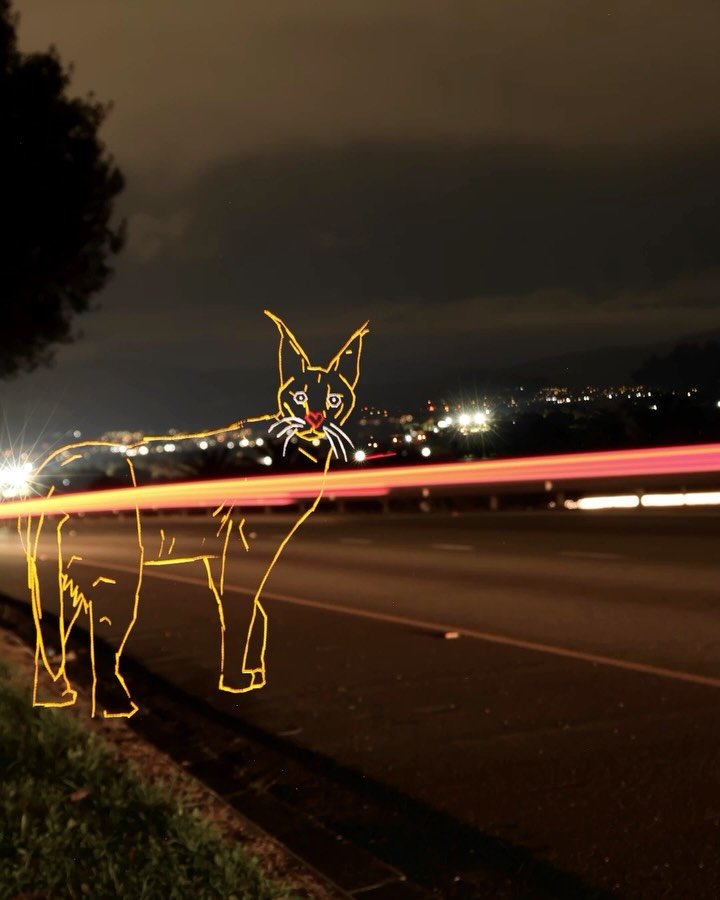
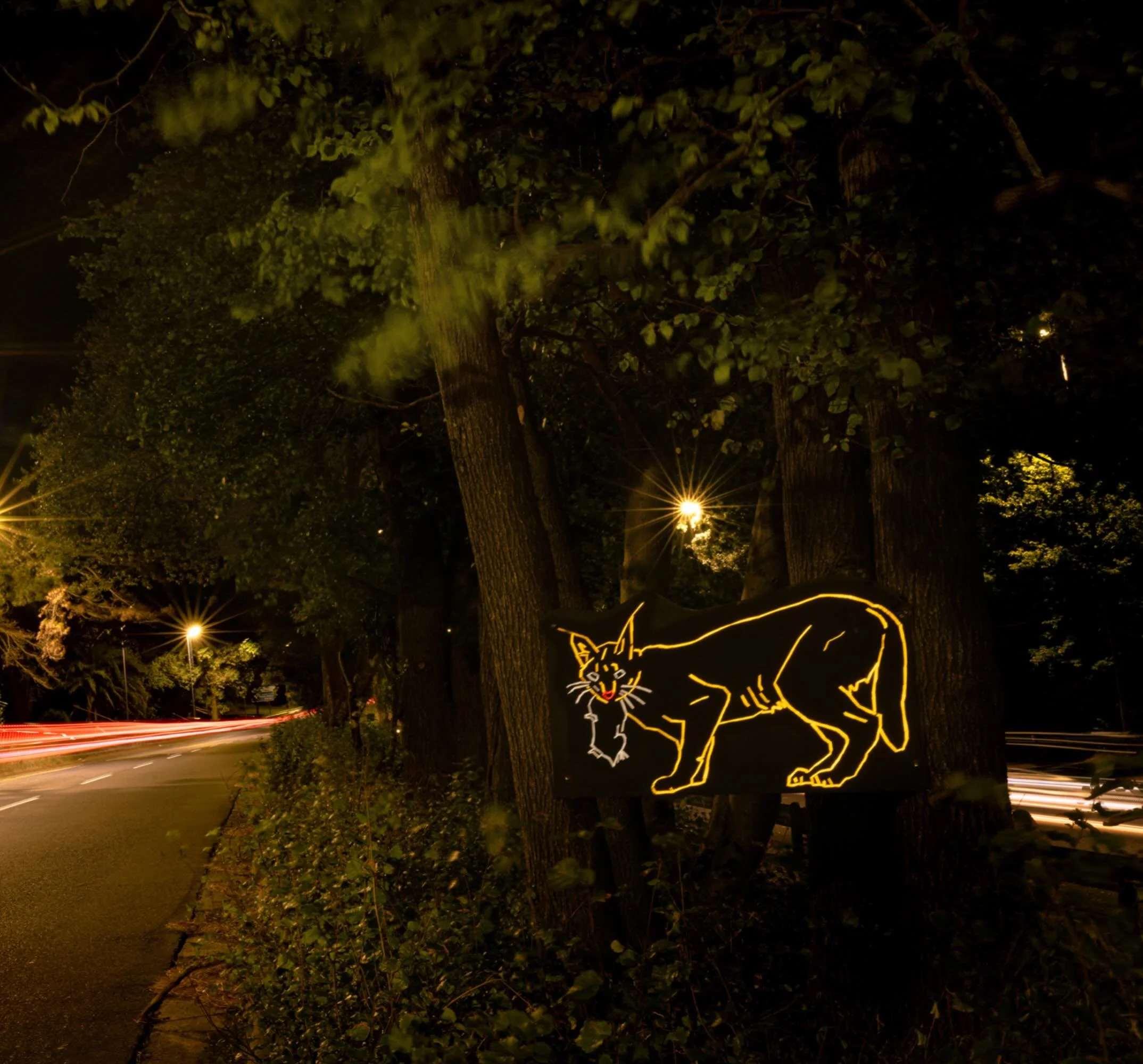
What do you see in your headlights? ⚡️
If it’s a reflective silhouette, you’re in caracal territory 🐱✨
These artworks mark known crossing points: slow down, stay alert, and spread the word.
Let’s keep Cape Town wild.
#ConserveCapeCaracals #EveryCaracalCounts #SlowDownForWildlife #HeadlightsForWildlife #ReflectiveRooikatte

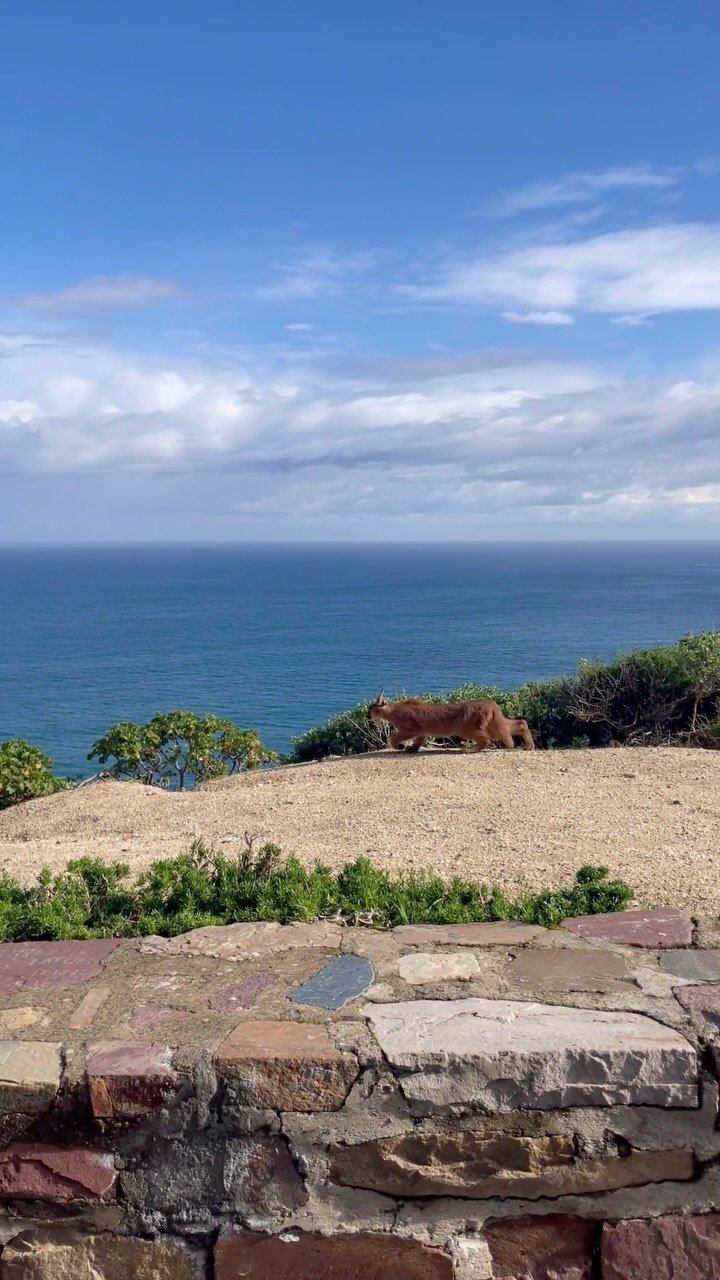
Caracal spotted on Chapman’s Peak Drive! ⛰️🌊
We’ve received a sighting along this scenic coastal route. Caracals cross the road to forage along the cliffs for dassies (rock hyrax) and seabirds.
Please spread the word to drive carefully along this road! And please report your caracal sightings to our website form (link in bio).
🎥 Rebecca Levy
#ConserveCapeCaracals #SlowDownforWildlife #WildlifeFriendlyRoads #urbancaracal #rooikat

⚠️☠️ OU KAAPSE WEG
A commuting route for drivers; a death trap for wildlife! ☠️⚠️
This mountain pass cuts straight through the Table Mountain National Park. 🌿 Despite having wildlife habitat on both sides, it has no fencing. It has no underpasses or overpasses for animals. There is very limited signage and speed limits are not enforced.
This road is by far the worst for caracal car collisions. We have retrieved 16 caracal mortalities there since 2015, with many more unreported. Just this weekend, a caracal kitten was mowed down.
If you drive this route - SLOW DOWN and LOOK OUT for wildlife crossing the road. Let’s do what we can to keep Cape Town wild. 🙌
#ReflectiveRooikatte #ConserveCapeCaracals #EveryCaracalCounts
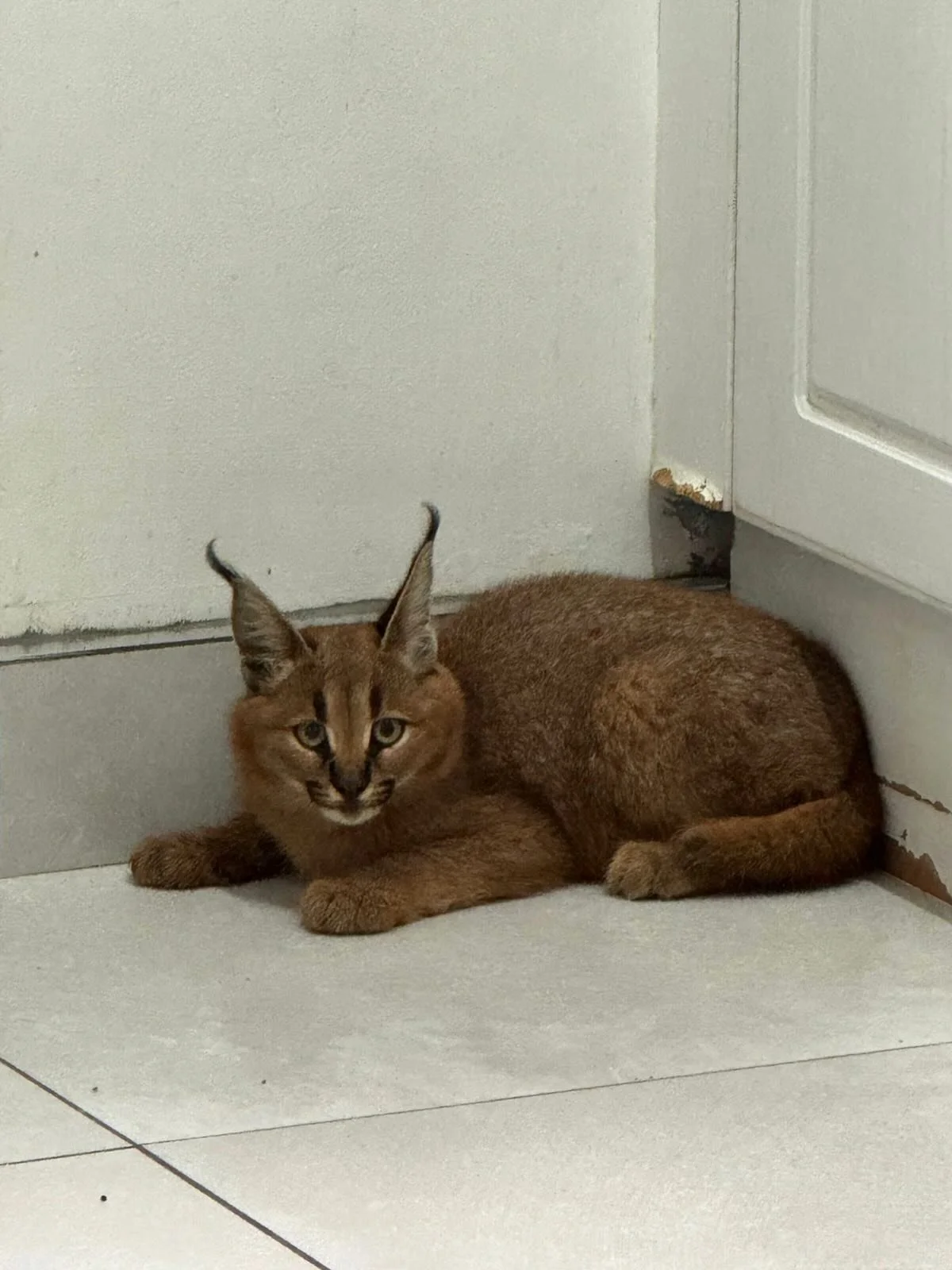
There’s a caracal in my kitchen!
We’ve had a few reports of young caracals wandering into people’s homes recently. This is not unheard of! Back in 2018, one of our monitored cats, TMC30 Beskuitjie, found herself in a kitchen in Durbanville, near Tygerberg Reserve.
While it may sound unbelievable that a caracal wandered inside someone’s house seemingly very confused, it’s actually not super uncommon for young wild cats to get “lost” in urban areas. As curious young individuals looking to “move out on their own”, they sometimes catch themselves in very awkward situations! Typically, they are wandering around learning about their environment, and where is safe, and unsafe, to be, and before they know it, someone has spotted them or the sun has come up! Their response, like most other cats, is just to hunker down and hope that no one notices them!
Remember, if you come across a caracal in any situation, stay quiet and calm and give it space to minimise any disturbance. If the caracal is inside a building, open the doors and windows and let him/her leave of their own accord.
📸 Helena Willicott and anonymous
#ConserveCapeCaracals #urbanwildlife #urbancaracal

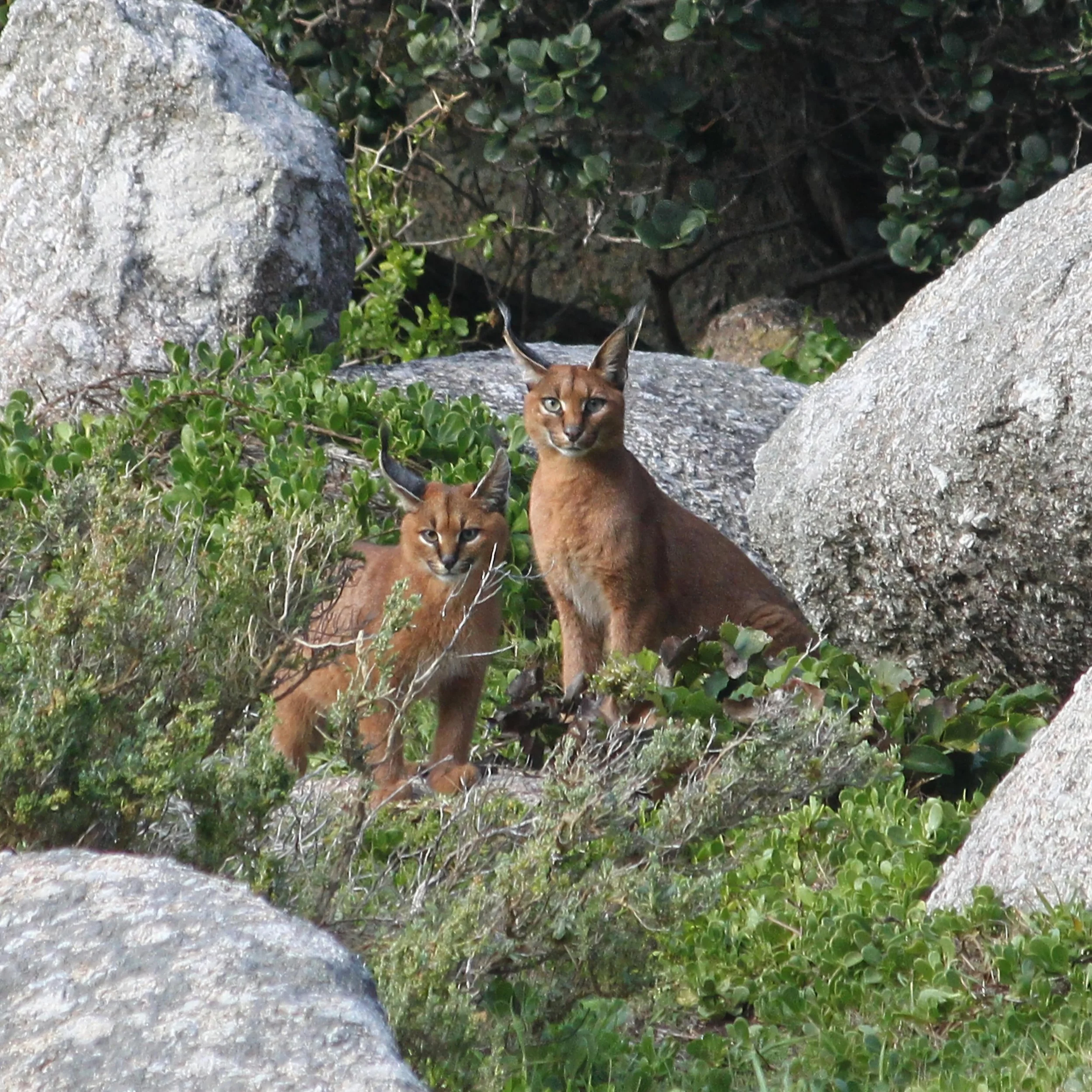
Lucky sighting! 😸 @coolcapetravel spotted these two caracals in Cape Point recently! Remember to report your caracal sightings to our website: urbancaracal.org and let us know about any wildlife roadkill ASAP on +27 79 837 8814 📲 #conservecapecaracals #urbanwildlife
We have had several reports of seeing multiple caracals recently. It seems that at this time of year, many juvenile caracals are tagging along with their mothers.
Caracal kittens spend their first few weeks hidden in a safe den. We found that 1 - 3 primary dens are used while kittens are very small. Once the kittens grow up a little, short-term auxiliary dens are used, and den sites can change quite often. Now that this year’s kittens are bigger, they are becoming more visible as they follow mom around her territory while learning to hunt and avoid threats.
If you see a young caracal on its own, its mother is likely nearby. Remember to respect wildlife. Do not disturb the kitten and maintain and distance of at least 25m.
Read more about caracal denning and maternal behaviour in our paper (link in bio)
📸 Anya Adendorff (2026)
#ConserveCapeCaracals #urbanwildlife #wildlifephotography #kitten
Did you know that city growth is quietly threatening the Cape Peninsula’s caracals? 🏙️ In our latest scientific paper we looked at the population genetics of caracals living in the Cape Peninsula and around Cape Town, as well as in the Central Karoo and Namaqualand.
As Cape Town has expanded, these wild cats’ populations have become cut off from one another by Cape Town’s urban matrix. The result? The genetic diversity across multiple metrics (heterozygosity and allelic richness shown here) in Cape Peninsula caracals is lower than that observed in populations outside of Cape Town and in the Greater Cape Town region. 🧬 Relatedness among the Cape Peninsula’s caracals is also twice as high as seen in the other populations (➡️ swipe to see graph). The isolated Cape Peninsula population is becoming more vulnerable, less resilient, and less able to adapt to future threats.
Importantly, this has happened quickly. Cities don’t need thousands of years to impact wildlife - the genetic effects of Cape Town’s urban sprawl are already detectable today.
Caracals are one of Africa’s most adaptable carnivores, yet even they are struggling to cope with the pace of urban expansion. It’s a reminder that the animals living alongside us in and around our cities need us to think carefully about how we grow and develop.
Solutions exist: wildlife-friendly road crossings, green corridors, and conservation planning that accounts for animal movement. These measures take time to implement but awareness is the first step.
Read the full paper here: https://link.springer.com/article/10.1007/s10592-026-01776-9 📑
📸 Michael McSweeney (2019)
#ConserveCapeCaracals #urbanwildlife #genetichealth #urbanecology #conservation
What do you see in your headlights? ⚡️
If it’s a reflective silhouette, you’re in caracal territory 🐱✨
These artworks mark known crossing points: slow down, stay alert, and spread the word.
Let’s keep Cape Town wild.
#ConserveCapeCaracals #EveryCaracalCounts #SlowDownForWildlife #ReflectiveRooikatte
There’s a caracal in my neighbourhood!
We often get reports of caracals in suburban gardens and greenbelts. This is not unusual - they are an adaptable species trying to use the remaining available green space around the city to connect up territories and find food.
What can we do to coexist with caracals?
1. First of all, recognise how lucky you are to have a native predator nearby! Appreciate it. In a world that is increasingly developed and built-up, this is something that is getting rarer.
2. Observe from a distance - do not disturb or attempt to feed caracals. They are wild animals and only hunt live prey.
3. Keep dogs on leads, as they attack and kill caracals. Remember to also vaccinate and pick up after your dogs, as they can spread disease to local wildlife.
4. Keep your domestic cats indoors or inside an enclosed “catio”. Caracals mainly eat wild prey (vlei rats, Guinea fowl and Egyptian geese are most common). However, they are opportunistic predators and do occasionally kill domestic cats. While it might seem strange to us that cats hunt cats, this is completely normal behaviour in the wild. To be absolutely sure your pets are safe (including from vehicle collisions and disease risks!), it is best to keep them inside. Similarly, keep livestock in predator-proof enclosures.
5. Do not use rat poison! These highly toxic poisons are often eaten by animals that are not the target and make their way up the food chain into predators.
6. Report your sightings to our website! This is very useful information for our research (link in bio)
📸 Pete van der Spek #ConserveCapeCaracals #urbanwildlife #coexistence